tea.glass · sampling channel Encyclopedia · School · Atlas · Pu-erh · Equipment EN · RU · · · FR · ES · AR
tea.glass Cart (0)

home · catalog

Glass gaiwans

The gài wǎn — gongfu's clearest mirror

A lidded bowl is the most honest brewing vessel ever made. In glass, it becomes something more — a small window onto leaf, water, and time. Watch a *Mí Lán Xiāng* (蜜兰香) unfurl and you understand why this shape has outlived dynasties.

Glass gaiwans

Why glass changes the gaiwan

The gài wǎn (盖碗) entered Chinese tea culture during the Ming dynasty, when loose-leaf brewing replaced powdered and compressed forms. Its anatomy is deceptively simple — a bowl (碗), a lid (盖), and a saucer (托) — a three-part vessel that lets a single hand pour, filter, and present. For four hundred years it has been made in porcelain. Glass is a recent translation, and a useful one.

Porcelain hides the leaf. Glass reveals it. For visual teas — silver needle, jasmine pearls, blooming gōng yì (工艺) shapes, lightly oxidised dāncōng — the transformation inside the cup is half the experience. You see colour develop in real time: pale citrine at thirty seconds, deeper amber by the second infusion, the slow descent of stems and the upward spiral of trichomes catching the light.

Glass also makes the gaiwan honest about quality. A well-pressed silver needle stands like reeds in a pond. A tired one collapses. A real Bì Luó Chūn (碧螺春) sinks within seconds, its fine downy hair clouding the water briefly before settling. There is nowhere for a flawed leaf to hide.

The glass we source is borosilicate — the same family of glass used in laboratory ware and the original Hario carafes from 1948. It resists thermal shock at 150°C differentials, which means boiling water on a cold winter morning will not crack it. The walls are thinner than porcelain, around 2.0–2.4mm, which means the rim cools faster between pours — kinder to the fingers, more responsive to the brewer.

Capacities in this category run from 80ml to 180ml, with the sweet spot at 100–130ml for solo gongfu sessions and 150–180ml for two-person tables. Smaller vessels concentrate aroma above the leaf; larger ones give pǔ ěr the volume it needs to open. Read the full vessel-size reasoning in our visual brewing guide, or work through the sensory exercises at tea.degree. For deeper history, the encyclopedia entry on gaiwans at thetea.app traces the shape from Sichuan teahouses to Chaozhou tables.

This season’s glass gaiwans

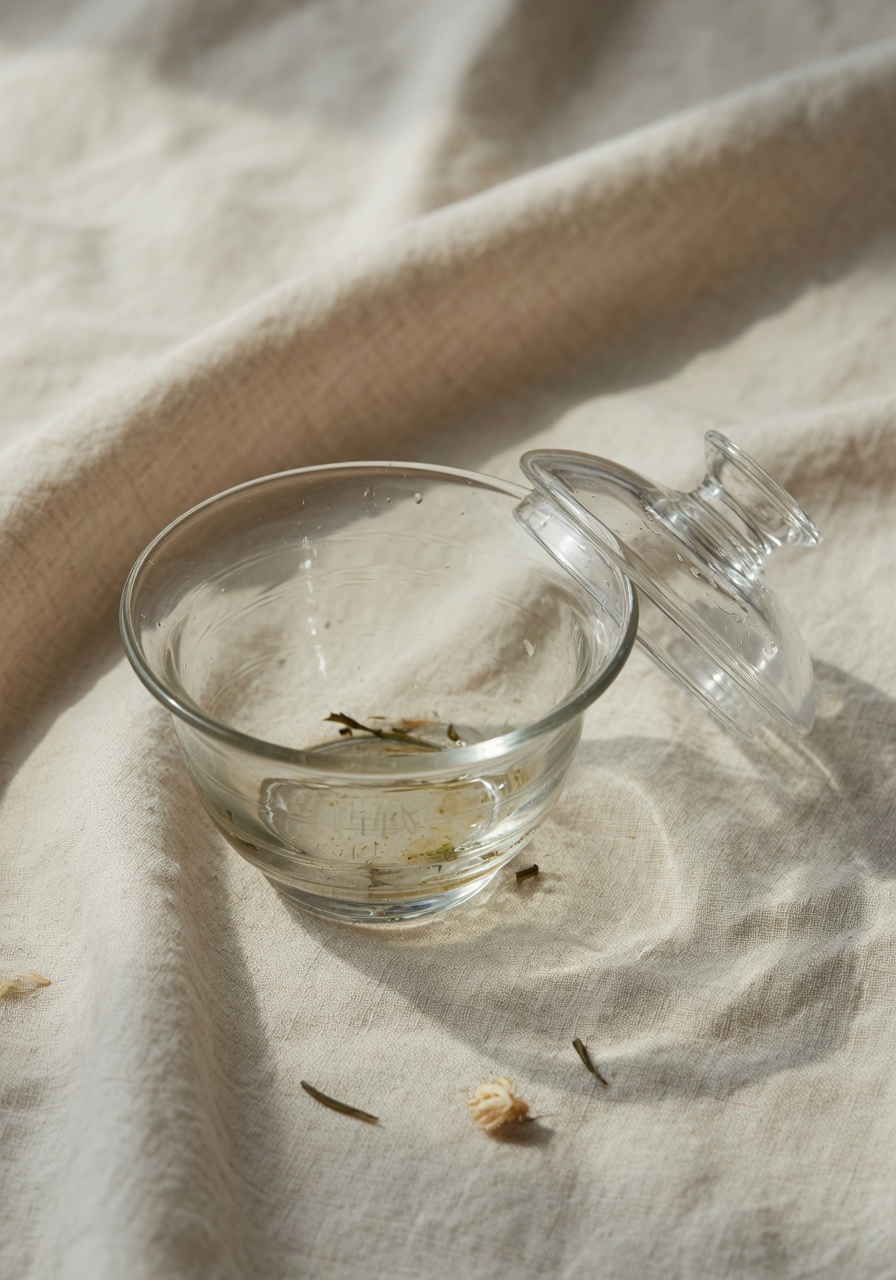
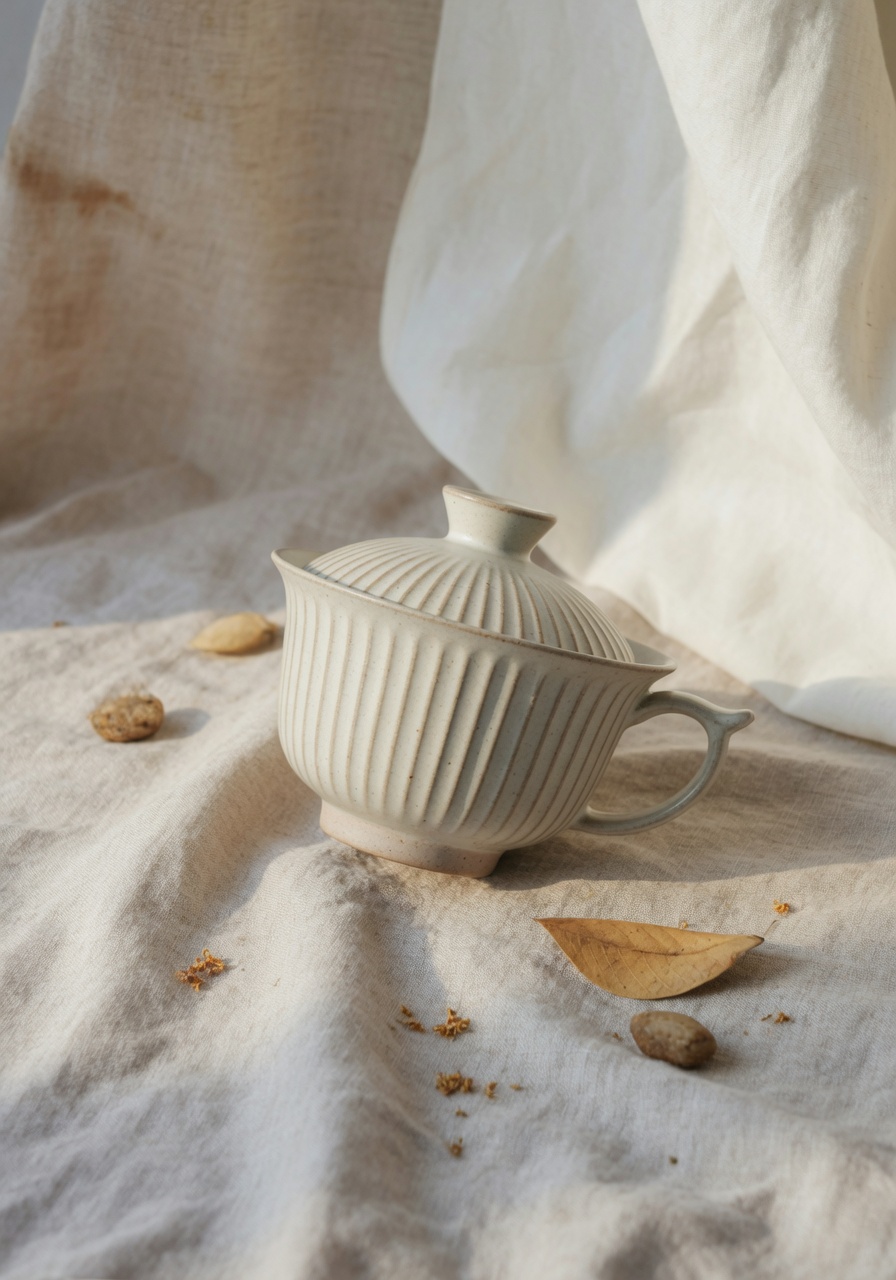
Two vessels we have spent the year with — one a clear workhorse from Hebei, one a fluted study piece from Guangxi.
This season's offer

Inside this category

Handan 90ml clear gaiwan

Handan 90ml clear gaiwan

Hán Dān · 邯郸

Liuzhou 120 مل قايوان مضلع

Liuzhou 120 مل قايوان مضلع

Liǔzhōu Léngwén Gài Wǎn · 柳州棱纹盖碗

Handan 110ml gaiwan — thicker-wall edition

*Hán Dān* 110ml *gài wǎn* — *hòu bì* edition · 邯郸厚壁盖碗 (110ml)

Handan 150ml gaiwan — large

*Gài Wǎn* · 盖碗

Handan 90ml clear gaiwan

Handan 90ml clear gaiwan

Hán Dān · 邯郸

Liuzhou 100ml gaiwan — amber tinted

<i>Liǔzhōu Gài Wǎn — hǔpò sè</i> · 柳州盖碗 — 琥珀色

Liuzhou 120ml fluted gaiwan

Liuzhou 120ml fluted gaiwan

Liǔzhōu Léngwén Gài Wǎn · 柳州棱纹盖碗

Liuzhou 80ml gaiwan — thin-wall edition

*Liǔzhōu* 80ml *Gài Wǎn* · 柳州盖碗

Gaiwan Handan 90 ml transparente

Gaiwan Handan 90 ml transparente

Hán Dān · 邯郸

Gaiwan estriado de Liuzhou de 120 ml

Gaiwan estriado de Liuzhou de 120 ml

Liǔzhōu Léngwén Gài Wǎn · 柳州棱纹盖碗

Gaiwan transparent Handan 90ml

Gaiwan transparent Handan 90ml

Hán Dān · 邯郸

Gaiwan cannelé Liuzhou 120ml

Gaiwan cannelé Liuzhou 120ml

Liǔzhōu Léngwén Gài Wǎn · 柳州棱纹盖碗

Гайвань 110 мл Handan — версия с утолщёнными стенками

*Hán Dān* 110ml *gài wǎn* — *hòu bì* edition · 邯郸厚壁盖碗 (110ml)

Гайвань Handan 150 мл — большая

*Gài Wǎn* · 盖碗

Гайвань Ханьдань 90 мл, прозрачная

Гайвань Ханьдань 90 мл, прозрачная

Hán Dān · 邯郸

Гайвань Liuzhou 100 мл — с янтарным оттенком

<i>Liǔzhōu Gài Wǎn — hǔpò sè</i> · 柳州盖碗 — 琥珀色

Лючжоу 120 мл рифлёная гайвань

Лючжоу 120 мл рифлёная гайвань

Liǔzhōu Léngwén Gài Wǎn · 柳州棱纹盖碗

Гайвань из Лючжоу 80 мл — тонкостенная версия

*Liǔzhōu* 80ml *Gài Wǎn* · 柳州盖碗

邯郸 110毫升盖碗 — 厚壁版

*Hán Dān* 110ml *gài wǎn* — *hòu bì* edition · 邯郸厚壁盖碗 (110ml)

邯郸 150ml 盖碗 — 大

*Gài Wǎn* · 盖碗

邯郸 90ml 透明盖碗

邯郸 90ml 透明盖碗

Hán Dān · 邯郸

柳州 120ml 棱纹盖碗

柳州 120ml 棱纹盖碗

Liǔzhōu Léngwén Gài Wǎn · 柳州棱纹盖碗

柳州80ml盖碗 — 薄壁版

*Liǔzhōu* 80ml *Gài Wǎn* · 柳州盖碗

邯鄲 110毫升蓋碗 — 厚壁版

*Hán Dān* 110ml *gài wǎn* — *hòu bì* edition · 邯郸厚壁盖碗 (110ml)

邯鄲 150ml 蓋碗 — 大

*Gài Wǎn* · 盖碗

邯鄲 90ml 透明蓋碗

邯鄲 90ml 透明蓋碗

Hán Dān · 邯郸

柳州 100ml 蓋碗 — 琥珀色調

<i>Liǔzhōu Gài Wǎn — hǔpò sè</i> · 柳州盖碗 — 琥珀色

柳州 120ml 棱紋蓋碗

柳州 120ml 棱紋蓋碗

Liǔzhōu Léngwén Gài Wǎn · 柳州棱纹盖碗

柳州80ml蓋碗 — 薄壁版

*Liǔzhōu* 80ml *Gài Wǎn* · 柳州盖碗

A buyer's note

Choosing a glass gaiwan

Capacity follows tea, not table size

100–120ml for *dāncōng* and green teas. 130–150ml for white tea and lighter oolong. 150–180ml only if you brew *pǔ ěr* or shared sessions.

Look at the lid seat

A good gaiwan has a slightly recessed inner rim so the lid sits flush at any angle. Tilt the lid 5° — water should pour clean without dribbling down the wall.

Borosilicate, not soda-lime

Borosilicate handles boiling water poured into a cool vessel without stress fracture. Soda-lime gaiwans crack within months. Check the spec sheet, not the price.

Wall thickness matters for your fingers

2.0–2.4mm is the working range. Thinner burns your fingers at the rim. Thicker loses the responsive feel that makes a gaiwan worth using over a teapot.

Saucer or no saucer

A saucer (托) lets you carry the vessel to a guest without touching the hot bowl. For solo brewing at your own table, many drinkers skip it. We sell both configurations.

Clean with water only

Glass needs no seasoning and rejects detergent residue. Rinse with the kettle's last pour after each session. Limescale comes off with a weak vinegar soak once a month.

Common questions

Asked, answered.

Won't a glass gaiwan burn my fingers?

Not if the lid seat is correct. The rim stays cooler than the body — pinch lid and rim together, never the side wall. Most beginners overfill; 80% capacity is the rule.

Can I use glass for *pǔ ěr*?

Yes, especially young *shēng*. Glass shows the orange-gold of a good 2019 *bǐng* beautifully. For aged shou, many drinkers prefer clay — see [shop.puerh.app](https://shop.puerh.app) for vessel pairings.

Does glass affect the taste compared to porcelain?

Negligibly. Borosilicate is chemically inert and adds no minerals. The only sensory difference is heat retention — glass cools slightly faster, which suits delicate greens and whites.

What size should my first gaiwan be?

110ml is the universal starting point. It works for every tea family, dose is intuitive at 5g, and the lid is small enough to handle without practice.

Are these dishwasher safe?

Technically yes for borosilicate, but we recommend hand-rinsing with kettle water only. Dishwasher detergent leaves film that dulls aroma.

How do I learn proper gaiwan technique?

Watch a real session before reading instructions. [tea.school](https://tea.school) runs a two-hour gongfu fundamentals course, and [tea.events](https://tea.events) lists in-person workshops in twelve cities.

What if it cracks?

Borosilicate failures within the first year are almost always a manufacturing flaw, not user error. We replace any vessel that cracks in normal brewing — write to us with a photograph.