Why glass at the cup, not just at the brewer
Most beginners focus on the brewing vessel — gaiwan or pot — and pour into whatever cup is at hand. Experienced drinkers reverse the logic. The cup is where you finally meet the tea: nose to rim, eye to liquor. A glass pǐn míng bēi removes every variable except the tea itself.
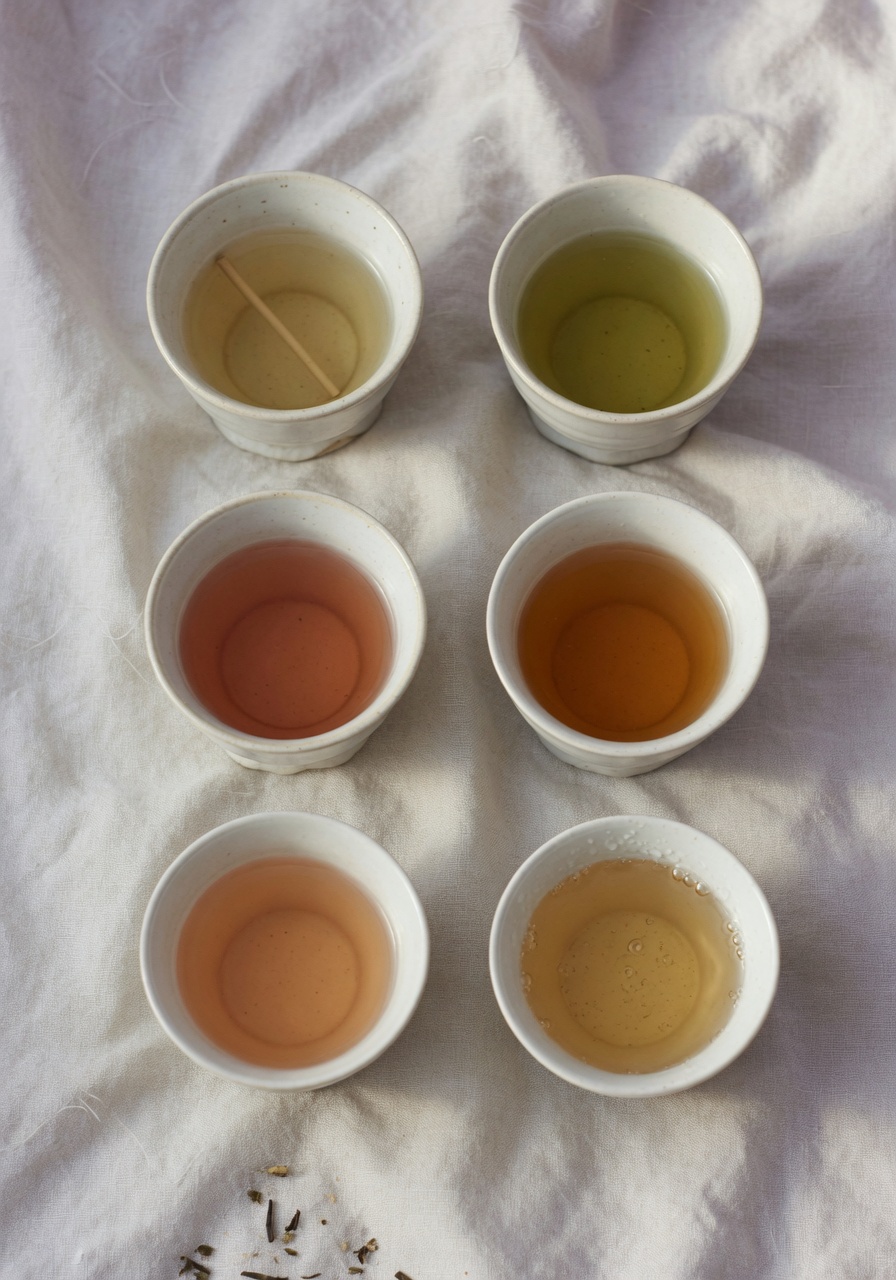
The form has Chaozhou roots. Traditional gongfu cha in Guangdong uses thimble-sized cups — often around 25ml — so a single gaiwan can pour three or four guests in one round, and so each sip is finished while still warm. When Hario and a handful of Taiwanese glass studios started producing heat-resistant borosilicate versions in the 1990s, the visual side of the practice opened up. Suddenly you could read a dāncōng steep against a white wall and see the exact moment the liquor turned from green-gold to amber.
Good tasting cups share four traits. First, thin walls — around 1.5mm — so the cup warms in the hand without insulating the tea away from your lip. Second, an outward-flaring rim that directs liquor onto the front of the tongue, where sweetness lives. Third, perfectly clear borosilicate (no lead crystal, no recycled green tint) so colour reads true. Fourth, a base small enough to fit on a chá chuán tea boat without crowding.
Seasonality matters less here than for tea itself, but production does cluster: most small studios fire batches in autumn and winter when the workshops are cooler. A hand-blown cup will show faint pontil marks on the base and tiny variations in wall thickness — these are not defects, they are the signature of breath and timing.
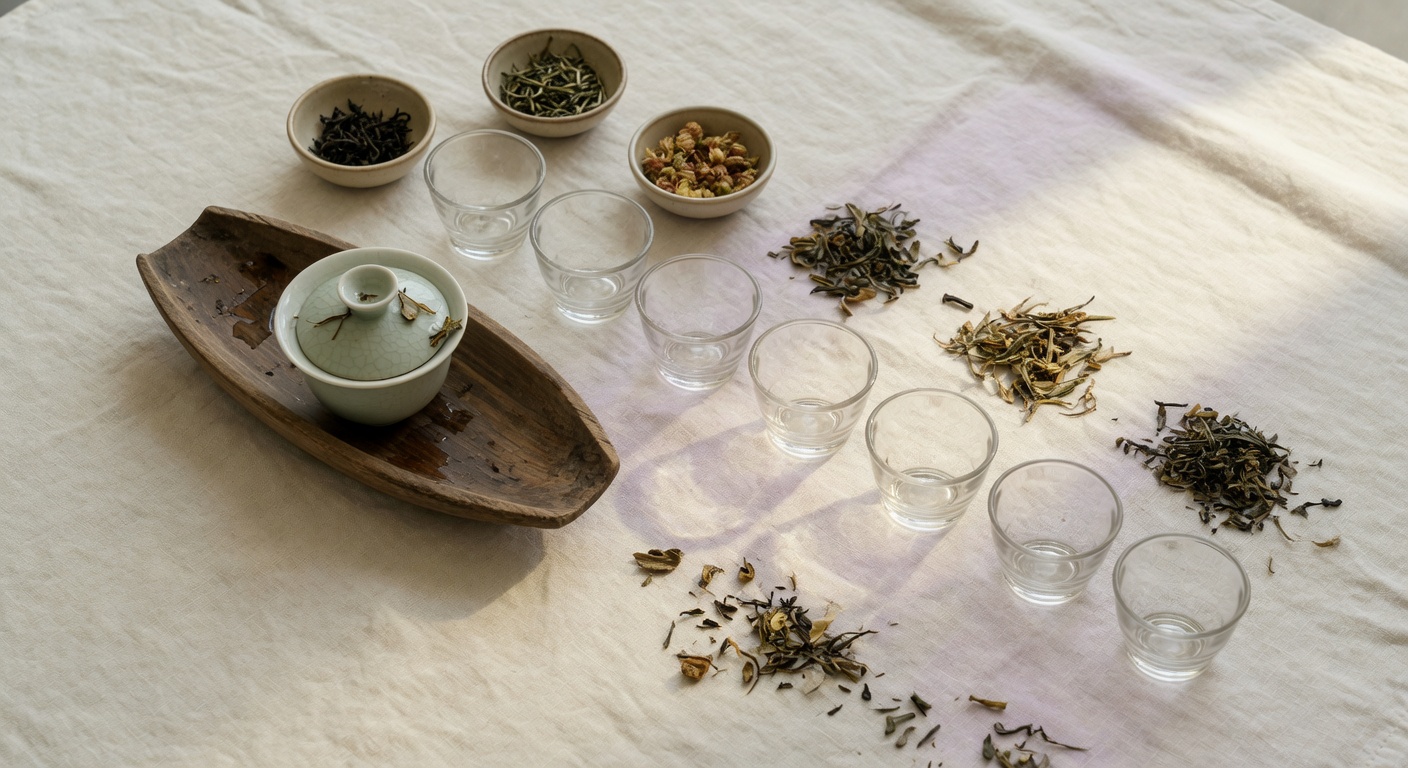
Pair tasting cups with a glass gaiwan or a clear fairness pitcher and you have a full visual gongfu set. The encyclopedia entry on gongfu service at thetea.app/gongfu walks through the choreography; our own /guide/visual-teas lists which teas reward this kind of looking most.
This season’s tasting cups
A small, curated set — we add new makers when the firing schedule allows, not when the calendar says. Each cup is checked by hand for rim symmetry and clarity.