tea.glass · sampling channel Encyclopedia · School · Atlas · Pu-erh · Equipment EN · RU · · · FR · ES · AR
tea.glass Cart (0)

home · catalog

أواني زجاجية — أكواب التذوق

أكواب زجاجية صغيرة لقراءة المشروب بصدق

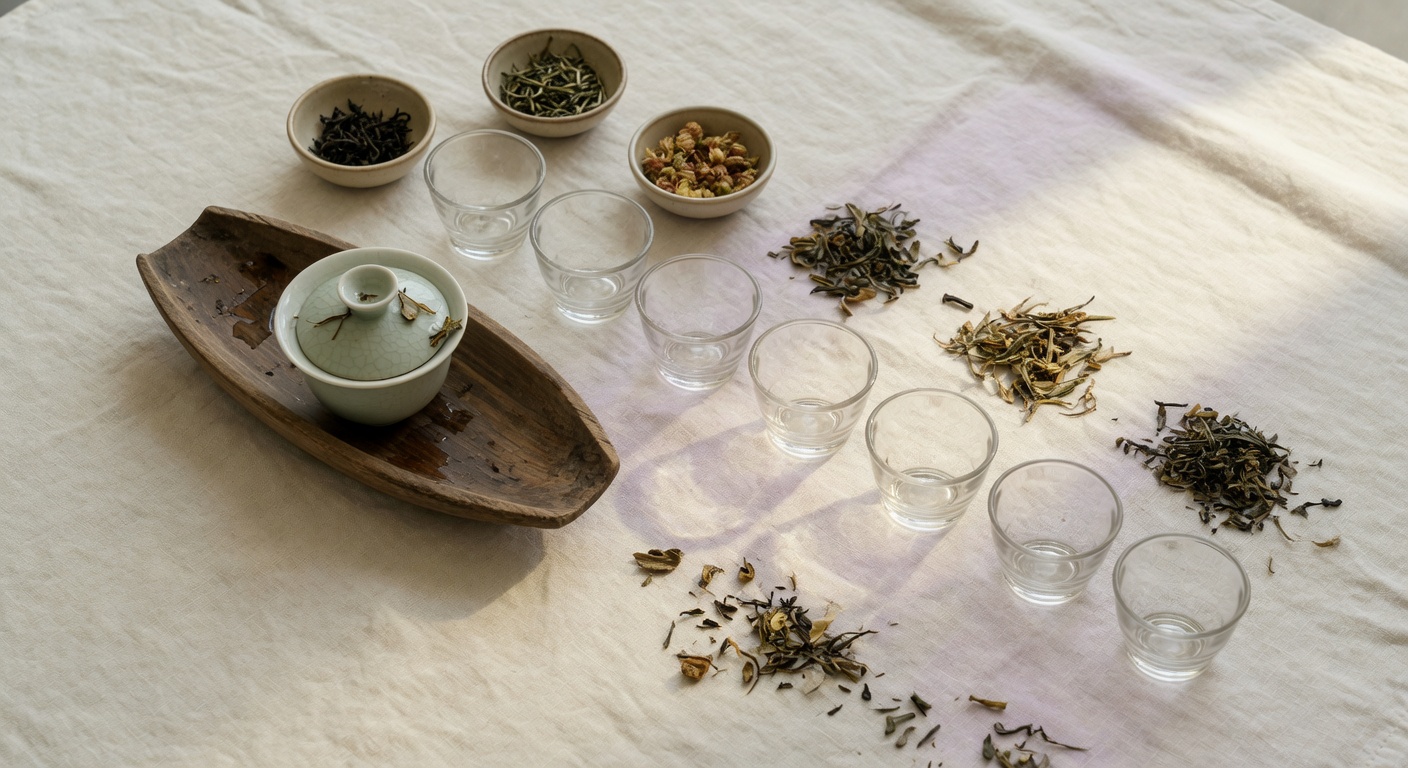
أكواب التذوق — *pǐn míng bēi* (品茗杯) — هي أصغر قطعة في إعداد الغونغفو، والأكثر كشفاً. بسعة 25–50 مل، يُظهر الكوب الزجاجي الشفاف اللون الحقيقي لكل نقعة: الذهبي لـ *yín zhēn*، الحافة المشمشية لـ *mí lán xiāng*، الصدأ لـ *shú pǔ* المُعَتَّق. لا طين، لا طلاء، لا تجميل.

أواني زجاجية — أكواب التذوق

لماذا الزجاج في الكوب، وليس فقط في وعاء التحضير

يركز معظم المبتدئين على وعاء التحضير — الغايوان أو الإبريق — ويصبون في أي كوب في متناول اليد. أما ذوو الخبرة فيعكسون المنطق. الكوب هو المكان الذي تلتقي فيه أخيراً بالشاي: الأنف عند الحافة، والعين على السائل. كوب pǐn míng bēi الزجاجي يزيل كل متغيرات ما عدا الشاي نفسه.

الشكل له جذور من تشاوتشو. طقوس gongfu cha التقليدية في غوانغدونغ تستخدم أكواباً بحجم الكشتبان — غالباً حوالي 25 مل — بحيث يستطيع غايوان واحد أن يصب لثلاثة أو أربعة ضيوف في جولة واحدة، وتُشرب كل رشفة وهي لا تزال دافئة. عندما بدأت هاريو وحفنة من استوديوهات الزجاج التايوانية في إنتاج إصدارات من البوروسيليكات المقاومة للحرارة في التسعينيات، انفتح الجانب البصري للممارسة. فجأة أصبح بإمكانك قراءة نقعة dāncōng على جدار أبيض ورؤية اللحظة الدقيقة التي يتحول فيها السائل من الأخضر الذهبي إلى الكهرمان.

أكواب التذوق الجيدة تشترك في أربع خصائص. أولاً، جدران رقيقة — حوالي 1.5 مم — بحيث يسخن الكوب في اليد دون أن يعزل الشاي عن شفتك. ثانياً، حافة متوهجة للخارج توجه السائل إلى مقدمة اللسان، حيث تكمن الحلاوة. ثالثاً، بوروسيليكات شفاف تماماً (لا كريستال رصاصي، ولا لون أخضر معاد تدويره) ليُقرأ اللون بصدق. رابعاً، قاعدة صغيرة بما يكفي لتلائم قارب الشاي chá chuán دون ازدحام.

تأثير الموسمية هنا أقل مما هو للشاي نفسه، لكن الإنتاج يتجمع فعلاً: معظم الاستوديوهات الصغيرة تُشغّل دفعاتها في الخريف والشتاء عندما تكون الورش أبرد. الكوب المنفوخ يدوياً سيُظهر علامات بونتيل خفيفة على القاعدة وتفاوتات طفيفة في سماكة الجدران — هذه ليست عيوباً، بل هي توقيع النفَس والتوقيت.

اقرن أكواب التذوق بغايوان زجاجي أو إبريق عدالة شفاف وستحصل على مجموعة غونغفو بصرية كاملة. مدخل الموسوعة حول خدمة الغونغفو في thetea.app/gongfu يشرح التصميم الحركي؛ ودليلنا /guide/visual-teas يسرد أنواع الشاي التي تستحق هذا النوع من التأمل البصري أكثر.

أكواب التذوق لهذا الموسم

مجموعة صغيرة منسّقة — نضيف صانعين جدد عندما يسمح جدول الحرق، وليس عندما يقول التقويم. يتم فحص كل كوب يدوياً للتأكد من تناسق الحافة والصفاء.

Automated translation — native review pending.

A buyer's note

Choosing tasting cups that earn their place

طابق السعة مع وعاء التحضير الخاص بك

A 110ml gaiwan pours cleanly into three 30ml cups with a little fairness-pitcher headroom. Cups larger than 50ml break the gongfu rhythm — the tea cools before the second sip.

افحص حافة الكوب بالضوء

Hold the cup at eye level and rotate. A well-finished rim is a single smooth curve with no thick spots. Thick rims feel clumsy on the lip and dull the first impression of the liquor.

بوروسيليكات، وليس صودا-جير

Only borosilicate handles the thermal shock of 95°C tea poured into a room-temperature cup. Cheaper soda-lime glass will craze and eventually crack at the base seam.

اشترِ بأعداد زوجية، وزد واحداً

Six or eight cups, plus a spare. Tasting cups break — not often, but inevitably — and matched sets are hard to complete later. The spare also lets you serve an extra guest without breaking symmetry.

اغسل يدوياً، وجفف بوضع الحافة للأسفل

No detergent, no dishwasher. Rinse with hot water, wipe with a lint-free cloth, store rim-down on a bamboo rack so the inside stays dust-free between sessions.

اقرن الشفاف مع الشفاف

If your gaiwan is glass, keep the cups glass too. Mixing porcelain cups with a glass gaiwan splits the visual logic — the whole point is to read colour from brew to sip.

Common questions

Asked, answered.

How many tasting cups do I actually need?

For solo drinking, two — one to sip from, one to compare steeps side by side. For guests, six is the standard gongfu number. Eight if you host often.

Can I use these cups for coffee or spirits?

Physically yes, but coffee oils stain the inside and dull future tea sessions. Keep tasting cups for tea only — a separate small glass set for whisky or espresso is cheap insurance.

Why are tasting cups so small?

Gongfu brewing produces concentrated, short infusions. A 30ml pour is finished in two or three sips while still hot, which is when aromatics are most readable. Larger cups cool before you finish them.

Do glass cups change the taste compared to porcelain?

Glass is the most neutral surface available — it adds nothing. Porcelain is also neutral but slightly insulating; clay cups actively shape the tea. For tasting and learning, glass is the honest choice.

Will hot tea crack a glass cup?

Not if the cup is borosilicate and at room temperature. Avoid pouring boiling tea into a cup straight from the fridge or a cold windowsill — let it acclimatise first.

Which teas show best in glass cups?

Yellow tea, silver needle white, light *dāncōng* oolong, and aged *shēng pǔ* all reveal subtle colour shifts. Our [visual teas guide](https://tea.glass/guide/visual-teas) lists them in detail, and you can sample several through [tea.gratis](https://tea.gratis).

Where can I learn the full gongfu service that uses these cups?

The intermediate course at [tea.school](https://tea.school) covers cup placement, pouring order, and the etiquette of presenting liquor to guests. The encyclopedia at [thetea.app](https://thetea.app) has shorter reference entries.