tea.glass · sampling channel Encyclopedia · School · Atlas · Pu-erh · Equipment EN · RU · · · FR · ES · AR
tea.glass Cart (0)

home · catalog

玻璃器皿 — 品茗杯

小型玻璃杯,誠實解讀茶湯

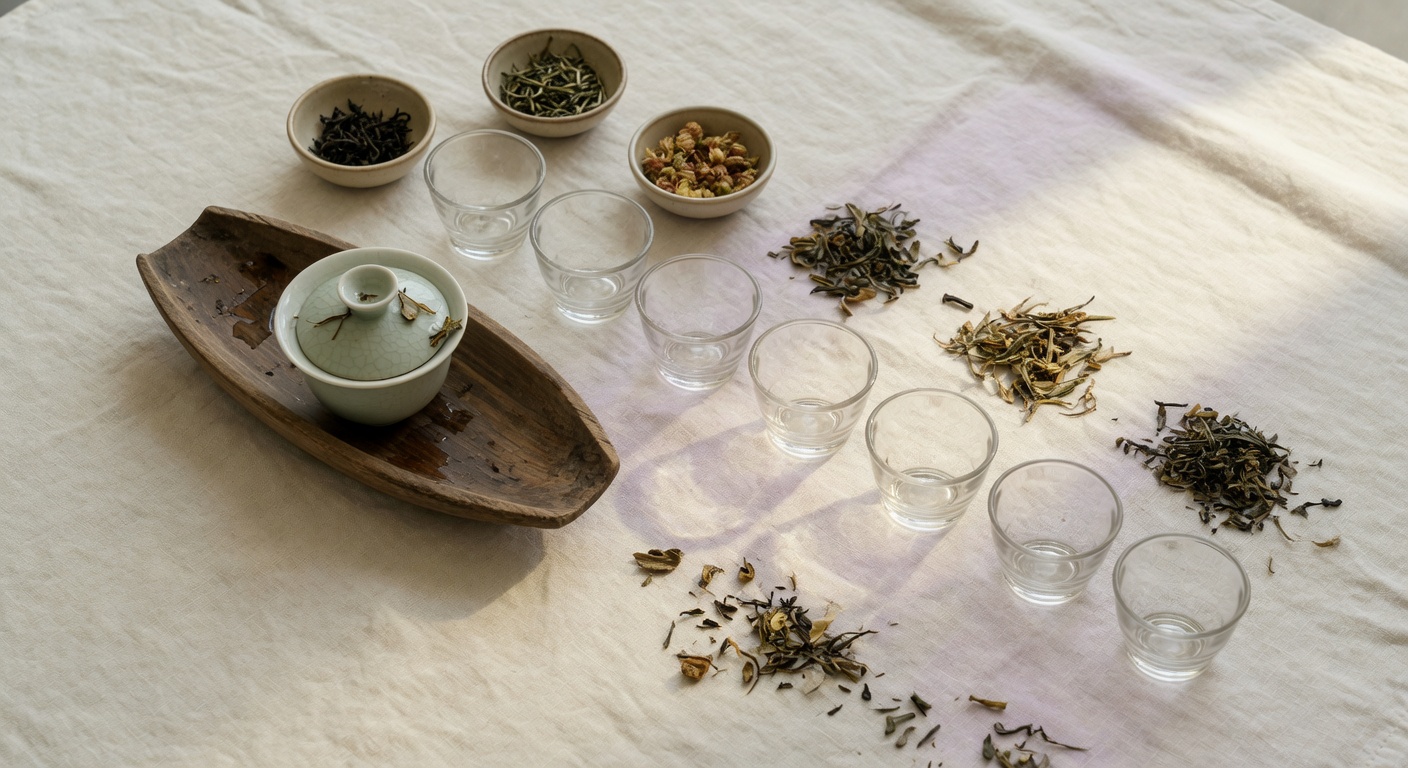
品茗杯 — *pǐn míng bēi* (品茗杯) — 是工夫茶席中最小的器物,也是最赤裸的展現。25–50毫升之間,清透的玻璃杯顯露每一泡的本色:*yín zhēn* 的金黃、*mí lán xiāng* 的杏邊、陳年 *shú pǔ* 的銹色。沒有陶土,沒有釉藥,沒有美化。

玻璃器皿 — 品茗杯

為何杯子該用玻璃,而不只是沖泡器

多數初學者關注在沖泡器 — 蓋碗或茶壺 — 然後倒入手邊任何杯子。有經驗的飲茶者則顛倒邏輯。杯子才是你最終遇見茶的地方:鼻對杯緣,眼對茶湯。一只玻璃 pǐn míng bēi 除去了茶本身之外的所有變數。

此形制根系潮州。廣東傳統 工夫茶 使用頂針大小的小杯 — 通常約25毫升 — 因此一個蓋碗可一次斟給三、四位客人,而每一口都在仍溫熱時飲盡。1990年代,當 Hario 與幾家台灣玻璃工作室開始生產耐熱硼矽酸鹽版本,這套作法的視覺面向便打開了。驀地,你能將一杯 dāncōng 的茶湯對準白牆,親見茶湯從綠金轉為琥珀的精確瞬間。

良好的品茗杯共有四個特質。第一,薄壁 — 約1.5毫米 — 使杯身在手裡升溫,而不會隔絕茶湯與唇的接觸。第二,外擴的杯緣,將茶湯導向舌尖甜味所在。第三,極度透明的硼矽酸鹽玻璃(不含鉛水晶,無回收玻璃的綠調),讓顏色忠實呈現。第四,杯底小巧,足以放在 chá chuán 茶船上不顯擁擠。

比起茶本身,季節性在此較不重要,但生產確實集中在秋季與冬季,彼時工作室較涼爽。多數小型工作室在此時開窯燒製。手工吹製的杯子,底部會留有淡淡的底足痕跡(pontil marks),壁厚有輕微差異 — 這些並非瑕疵,而是氣息與時間的簽名。

將品茗杯與玻璃蓋碗或透明公道杯搭配,便構成完整的視覺性工夫茶組。關於工夫茶程序的百科條目,thetea.app/gongfu 詳述了動作細節;我們自家的 /guide/visual-teas 則列出了哪些茶最能從這種觀看中得到回饋。

本季品茗杯

一小組精選的杯子 — 我們按窯期決定增加新匠人,不按行事曆。每只杯子均經手工檢查杯緣對稱性與透明度。

A buyer's note

Choosing tasting cups that earn their place

杯量匹配沖泡器

A 110ml gaiwan pours cleanly into three 30ml cups with a little fairness-pitcher headroom. Cups larger than 50ml break the gongfu rhythm — the tea cools before the second sip.

對著光檢查杯緣

Hold the cup at eye level and rotate. A well-finished rim is a single smooth curve with no thick spots. Thick rims feel clumsy on the lip and dull the first impression of the liquor.

硼矽酸鹽玻璃,而非鈉鈣玻璃

Only borosilicate handles the thermal shock of 95°C tea poured into a room-temperature cup. Cheaper soda-lime glass will craze and eventually crack at the base seam.

雙數購買,再加一

Six or eight cups, plus a spare. Tasting cups break — not often, but inevitably — and matched sets are hard to complete later. The spare also lets you serve an extra guest without breaking symmetry.

手洗,杯口朝下晾乾

No detergent, no dishwasher. Rinse with hot water, wipe with a lint-free cloth, store rim-down on a bamboo rack so the inside stays dust-free between sessions.

清透相配

If your gaiwan is glass, keep the cups glass too. Mixing porcelain cups with a glass gaiwan splits the visual logic — the whole point is to read colour from brew to sip.

Common questions

Asked, answered.

How many tasting cups do I actually need?

For solo drinking, two — one to sip from, one to compare steeps side by side. For guests, six is the standard gongfu number. Eight if you host often.

Can I use these cups for coffee or spirits?

Physically yes, but coffee oils stain the inside and dull future tea sessions. Keep tasting cups for tea only — a separate small glass set for whisky or espresso is cheap insurance.

Why are tasting cups so small?

Gongfu brewing produces concentrated, short infusions. A 30ml pour is finished in two or three sips while still hot, which is when aromatics are most readable. Larger cups cool before you finish them.

Do glass cups change the taste compared to porcelain?

Glass is the most neutral surface available — it adds nothing. Porcelain is also neutral but slightly insulating; clay cups actively shape the tea. For tasting and learning, glass is the honest choice.

Will hot tea crack a glass cup?

Not if the cup is borosilicate and at room temperature. Avoid pouring boiling tea into a cup straight from the fridge or a cold windowsill — let it acclimatise first.

Which teas show best in glass cups?

Yellow tea, silver needle white, light *dāncōng* oolong, and aged *shēng pǔ* all reveal subtle colour shifts. Our [visual teas guide](https://tea.glass/guide/visual-teas) lists them in detail, and you can sample several through [tea.gratis](https://tea.gratis).

Where can I learn the full gongfu service that uses these cups?

The intermediate course at [tea.school](https://tea.school) covers cup placement, pouring order, and the etiquette of presenting liquor to guests. The encyclopedia at [thetea.app](https://thetea.app) has shorter reference entries.