tea.glass · sampling channel Encyclopedia · School · Atlas · Pu-erh · Equipment EN · RU · · · FR · ES · AR
tea.glass Cart (0)

home · catalog

玻璃盖碗

gài wǎn — 功夫茶最清晰的明镜

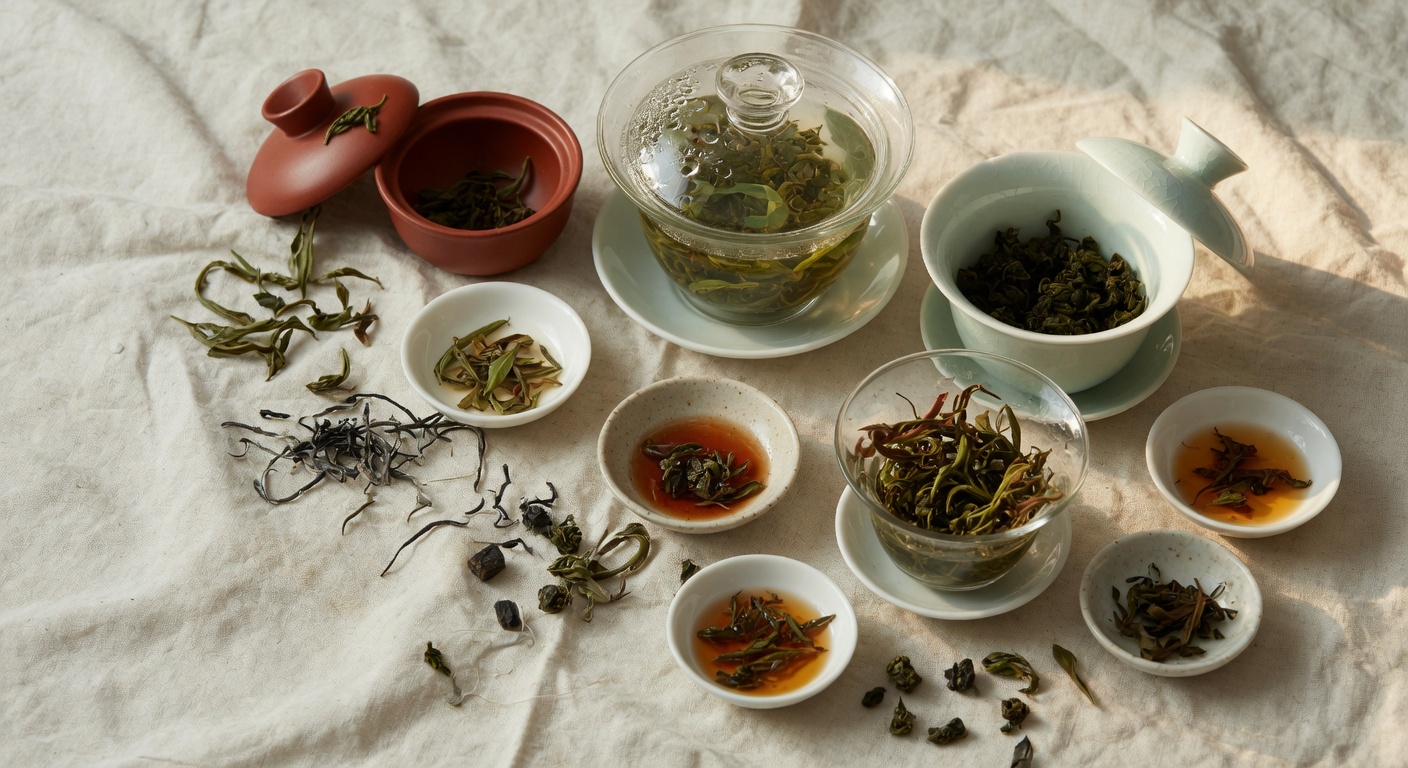
盖碗是有史以来最诚实的冲泡容器。换成玻璃材质,它变得更丰富 — 一扇观察茶叶、水与时间的小窗。看着 *Mí Lán Xiāng*(蜜兰香)舒展,你就会明白这个形状为何能超越朝代而不衰。

玻璃盖碗

玻璃为何改变了盖碗

盖碗(盖碗)在明代进入中国茶文化,当时散茶冲泡取代了粉状与压制茶。它的构造看似简单 — 一个碗(碗)、一个盖(盖)、一个托盘(托) — 一个三件式的器皿,能单手注水、过滤和呈现。四百年来它一直以瓷器制作。玻璃是近期的转译,且十分实用。

瓷器隐藏了茶叶。玻璃则让它展现。对于视觉性的茶 — 银针、茉莉珍珠、绽放的工艺(工艺)造型、轻氧化的dāncōng(单丛) — 杯中变化的过程占了体验的一半。你能即时看见颜色的发展:三十秒时呈淡黄晶色,第二泡时转为较深的琥珀色,梗缓慢沉降,茸毛顺势螺旋上升,捕捉光线。

玻璃也让盖碗对品质诚实。压制良好的银针如同池塘中的芦苇般挺立。疲软的则会瘫软。真正的碧螺春(碧螺春)在数秒内沉下,其细微绒毛短暂地使水变浊而后沉淀。任何有瑕疵的茶叶都无所遁形。

我们选用的玻璃是硼硅玻璃 — 与实验室器皿及1948年原创的Hario咖啡壶属同一玻璃家族。它能承受150°C的温差抗热震,代表着寒冷冬日早晨注入沸水不会使茶杯破裂。杯壁比瓷器薄,约2.0–2.4毫米,代表着杯缘在两次注水间冷却得更快 — 对手指更友善,对冲泡者反应更灵敏。

这类盖碗的容量从80毫升到180毫升不等,个人功夫茶时的最佳范围是100–130毫升,双人品饮则为150–180毫升。较小的器皿将香气浓缩于茶叶上方;较大的则给予普洱茶(普洱茶)所需的空间舒展。欲了解器皿大小的完整推论,请参阅我们的视觉冲泡指南,或通过tea.degree进行感官练习。更深入的历史,thetea.app上的盖碗百科条目追溯了这款器型从四川茶馆到潮州茶席的演变。

本季玻璃盖碗

我们一整年使用的两款器皿 — 一款来自河北的清透实用款,一款来自广西的带凹槽赏析之作。

A buyer's note

Choosing a glass gaiwan

容量取决于茶,非桌面大小

100–120ml for *dāncōng* and green teas. 130–150ml for white tea and lighter oolong. 150–180ml only if you brew *pǔ ěr* or shared sessions.

查看盖座

A good gaiwan has a slightly recessed inner rim so the lid sits flush at any angle. Tilt the lid 5° — water should pour clean without dribbling down the wall.

硼硅玻璃,而非钠钙玻璃

Borosilicate handles boiling water poured into a cool vessel without stress fracture. Soda-lime gaiwans crack within months. Check the spec sheet, not the price.

壁厚影响手指感受

2.0–2.4mm is the working range. Thinner burns your fingers at the rim. Thicker loses the responsive feel that makes a gaiwan worth using over a teapot.

附托或无托

A saucer (托) lets you carry the vessel to a guest without touching the hot bowl. For solo brewing at your own table, many drinkers skip it. We sell both configurations.

仅用清水清洗

Glass needs no seasoning and rejects detergent residue. Rinse with the kettle's last pour after each session. Limescale comes off with a weak vinegar soak once a month.

Common questions

Asked, answered.

Won't a glass gaiwan burn my fingers?

Not if the lid seat is correct. The rim stays cooler than the body — pinch lid and rim together, never the side wall. Most beginners overfill; 80% capacity is the rule.

Can I use glass for *pǔ ěr*?

Yes, especially young *shēng*. Glass shows the orange-gold of a good 2019 *bǐng* beautifully. For aged shou, many drinkers prefer clay — see [shop.puerh.app](https://shop.puerh.app) for vessel pairings.

Does glass affect the taste compared to porcelain?

Negligibly. Borosilicate is chemically inert and adds no minerals. The only sensory difference is heat retention — glass cools slightly faster, which suits delicate greens and whites.

What size should my first gaiwan be?

110ml is the universal starting point. It works for every tea family, dose is intuitive at 5g, and the lid is small enough to handle without practice.

Are these dishwasher safe?

Technically yes for borosilicate, but we recommend hand-rinsing with kettle water only. Dishwasher detergent leaves film that dulls aroma.

How do I learn proper gaiwan technique?

Watch a real session before reading instructions. [tea.school](https://tea.school) runs a two-hour gongfu fundamentals course, and [tea.events](https://tea.events) lists in-person workshops in twelve cities.

What if it cracks?

Borosilicate failures within the first year are almost always a manufacturing flaw, not user error. We replace any vessel that cracks in normal brewing — write to us with a photograph.