tea.glass · sampling channel Encyclopedia · School · Atlas · Pu-erh · Equipment EN · RU · · · FR · ES · AR
tea.glass Cart (0)
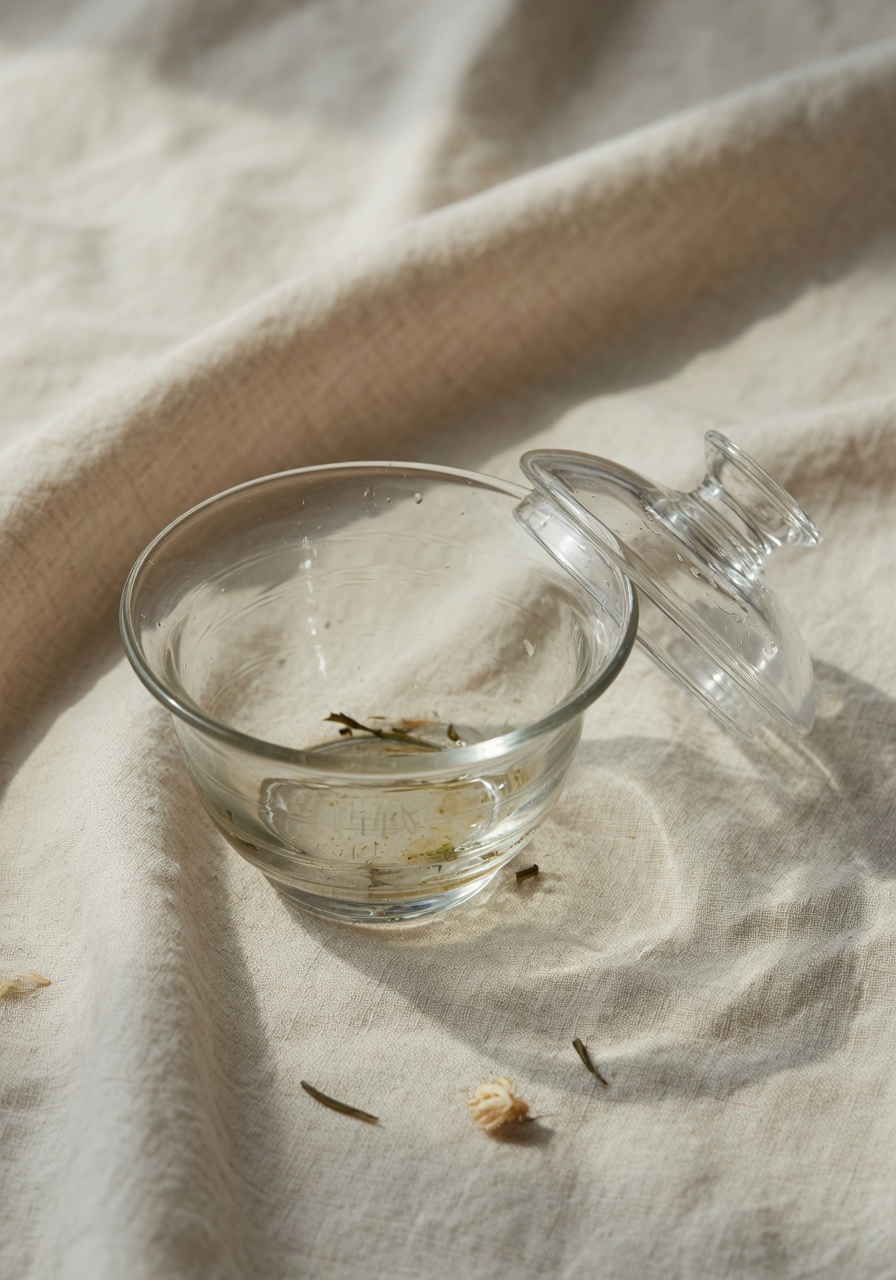
Handan 90ml clear gaiwan
dry
wet
liquor
plantation

home · gaiwans

Gaiwans — 盖碗

Handan 90ml clear gaiwan

Hán Dān

邯郸

A 90ml borosilicate gaiwan from Liu Shenyang's bench in Hebei — thin walls, balanced lid, the standard gongfu vessel for one or two drinkers.

$70USD · 95 g

Weight
95 g
Harvest
Spring 2025
Processing
Hand-blown borosilicate, flame-polished rim, lathe-finished lid knob, annealed for thermal shock
Sourced by

From Liu Shenyang’s bench, Handan

Handan, in southern Hebei, has blown laboratory glass since the 1950s. The Liu family workshop opened in 1987 on the edge of the old industrial district — three benches, one annealing oven, and a quiet specialty in thin-walled teaware once the lab contracts began drying up in the 2010s.

Sandry Law visited in March 2025 on a Hebei sourcing trip that began as a search for fairness pitchers and ended, as these trips usually do, somewhere else entirely. Liu Shenyang — the founder’s son, now running the bench — was pulling 90ml gaiwans at a rate of about forty a day. The rims were flame-polished by hand rather than cut, which is the detail that decided it. A cut rim chips. A flame-polished rim rolls into a soft lip that pours cleanly and doesn’t catch on the upper teeth.

We took the standard 90ml as our house size — large enough for two drinkers, small enough for a single sipper working through a session. Borosilicate (the same glass family as Pyrex) means it survives the rinse-with-boiling-water habit that kills cheaper soda-lime gaiwans within a season.

Each piece carries a small etched mark near the foot — Liu’s workshop signature, not a brand. Quality control is Sandry’s: every shipment gets weighed, lid-seated, and rung for annealing tone before it leaves Kunming. Reject rate has hovered around eight percent, which is high for glass and low for hand work.

The leaf, brewed

How it pours, how it holds

dry leaf

Clear as window glass, slight blue cast at the foot ring. Faint annealing iridescence near the lid seat.

wet leaf

After a rinse the glass fogs evenly, no streaking. Leaf shows true colour — useful for *dāncōng* and yellow tea.

liquor

Liquor reads honest through the wall — straw, amber, copper all sit at their real saturation, no green shift.

aroma

Lid traps aroma cleanly. No glass smell after first three uses. Holds heat just long enough to read top notes.

taste

Not a taste vessel — but the thin rim (1.6mm) pours without dribble and lets you sip from the bowl directly if you want.

finish

Cools fast, which is the point. Between steeps the leaf rests at drinkable temperature within twenty seconds.

Brewing

A method, not a recipe.

Method
gongfu
Ratio
1g : 15ml (≈6g leaf for full pot)
Water temp
85–100°C depending on tea
First infusion
10s after rinse
Subsequent
8–12 infusions for oolong and pu-erh, extending +5s from the fourth steep

Pre-warm with rinse water. The thin wall cools quickly — work briskly between pours, especially for white and green tea.

Sourced by

Sandry Law

Head of Procurement (China)

Full profile →