tea.glass · sampling channel Encyclopedia · School · Atlas · Pu-erh · Equipment EN · RU · · · FR · ES · AR
tea.glass Cart (0)

home · catalog

Glassware — fairness pitchers

The vessel that equalises every pour

A *gōng dào bēi* (公道杯) sits between the teapot and the cups — receiving the full infusion, mixing strong and weak portions, then distributing one even pour to every drinker. In glass, it also becomes a window into liquor colour, the most honest reading you will get of a tea's character.

Glassware — fairness pitchers

Why the fairness cup exists

The fairness pitcher — gōng dào bēi (公道杯), literally ‘cup of equal way’ — was a late addition to the gongfu table. Through most of the Ming and Qing, tea was poured directly from pot to cups in a rotating arc, the brewer balancing strength by eye. The dedicated decanter arrived with the Taiwanese gongfu revival of the 1970s and 80s, when service formalised around small clay pots and short, multiple infusions. With brewing times measured in seconds, even a half-second difference between the first and last cup poured creates noticeable imbalance. The fairness pitcher solves this in one step: the entire infusion is decanted at once, stirred by its own turbulence, then distributed.

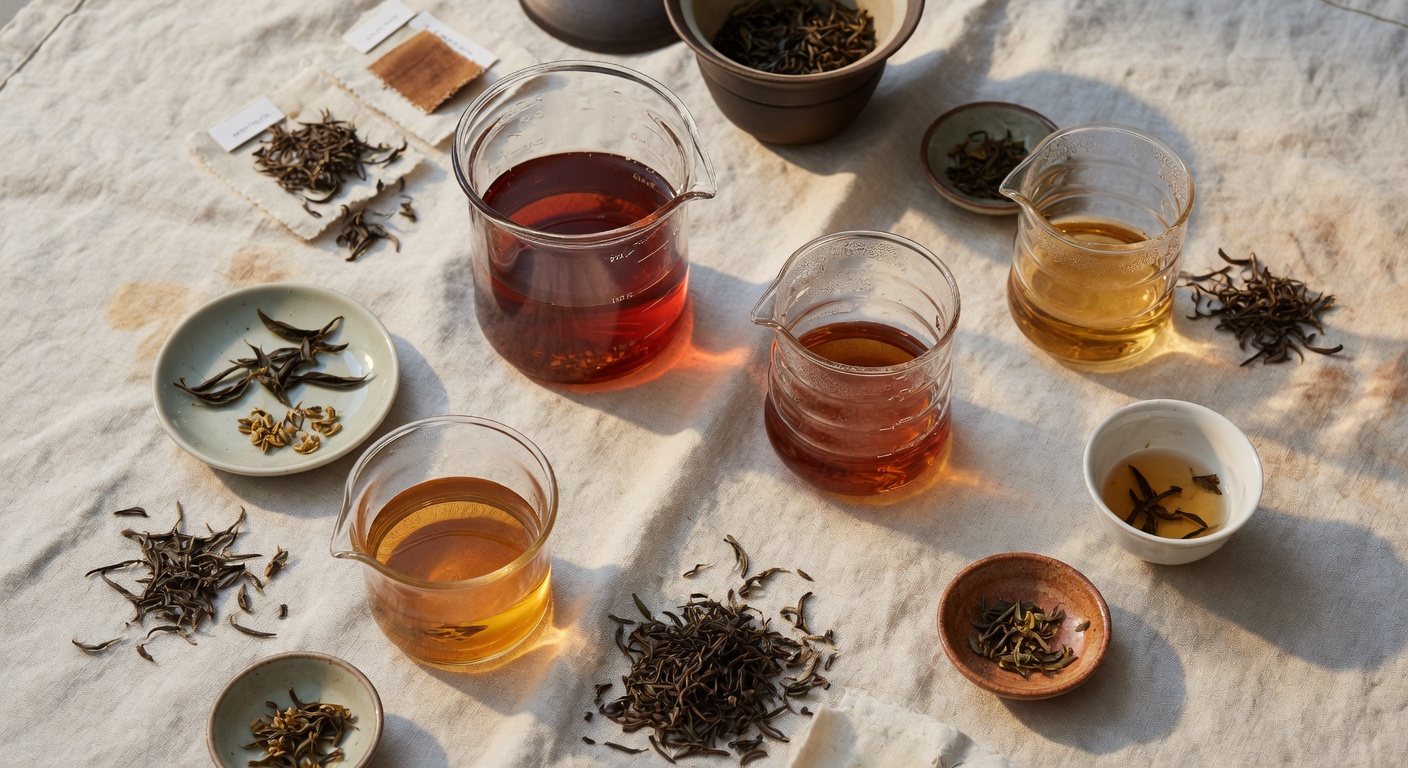
Glass changed the object again. A porcelain or clay pitcher hides the liquor; a borosilicate one reveals it. Suddenly the gōng dào bēi is also a reading instrument — you watch the colour deepen across infusions, see suspended trichomes in a yín zhēn, catch the orange-red of a properly fired Mí Lán Xiāng (蜜兰香) before it ever reaches the cup. For visual brewers this matters as much as the equalising function.

Good glass fairness pitchers share a few qualities. The spout should cut the pour cleanly, with no drip down the lip — this is almost entirely a question of the spout’s underside angle, ground sharp rather than rolled. The handle, if there is one, must not transmit heat; most modern designs use either a side ear of cool borosilicate or a wrapped rattan grip. Capacity should match your teapot — a 150ml pot wants a 200-250ml pitcher, allowing for the foam ring and a little headroom. Anything larger and the liquor cools too fast before reaching the cups.

Borosilicate 3.3 is the standard glass. It tolerates the thermal shock of boiling water poured into a room-temperature vessel, and over years of daily use does not cloud or craze. Lead crystal looks beautiful but leaches; soda-lime is fragile. For the geometry of brewing, see the gōng dào bēi entry on thetea.app, which traces the vessel’s twentieth-century lineage in more detail.

This season’s fairness pitchers

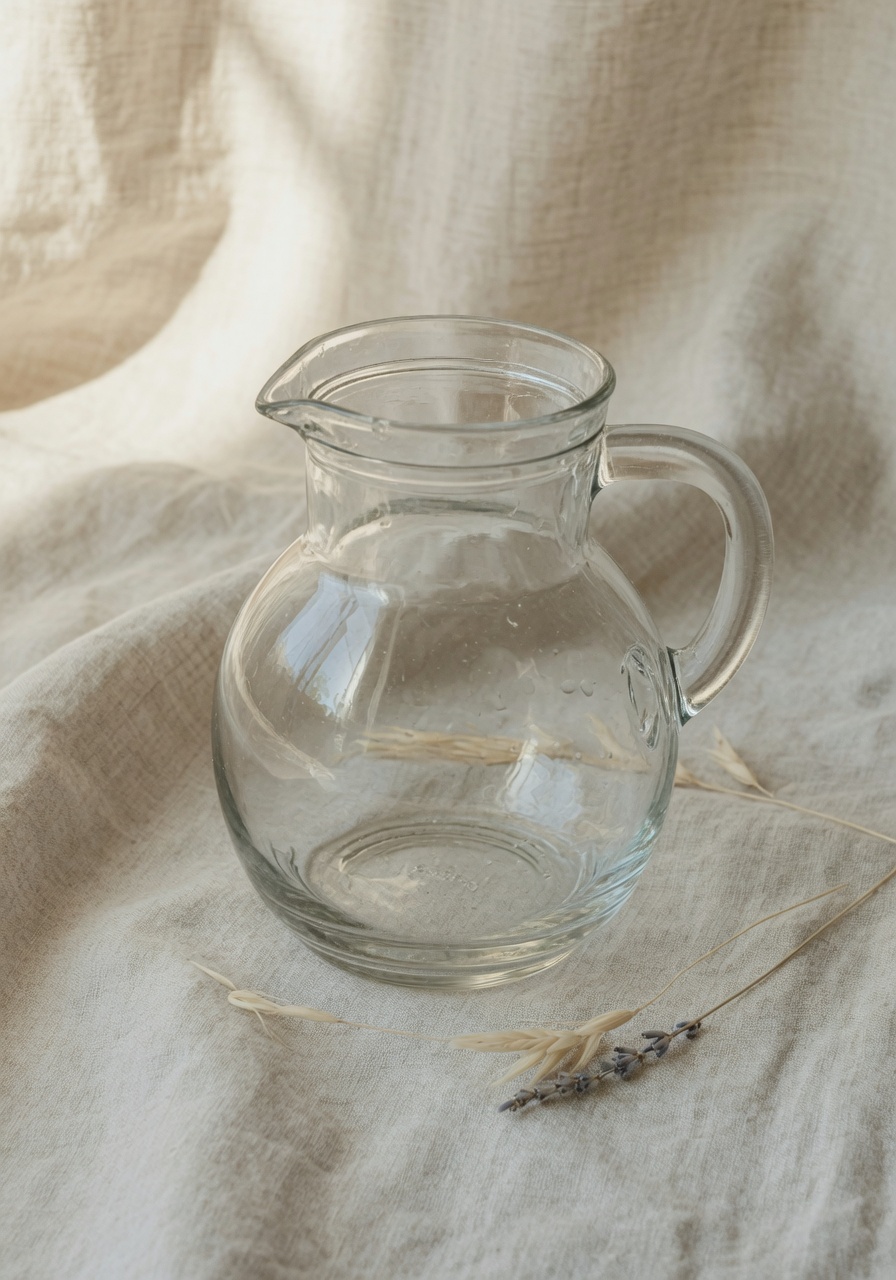
One piece, hand-blown in a small Hebei studio, sized for the most common gongfu format — a 150ml pot serving four cups.
This season's offer

Inside this category

إبريق التعديل هَاندان 200 مل

إبريق التعديل هَاندان 200 مل

Gōng Dào Bēi · 公道杯

Handan 200ml fairness pitcher

Handan 200ml fairness pitcher

Gōng Dào Bēi · 公道杯

Handan 300ml fairness pitcher — large

<i>Hán Dān Gōng Dào Bēi</i> — dà hào · 邯郸公道杯 — 大号

Liuzhou 180ml handle-less pitcher

*Gōng Dào Bēi* · 公道杯

Liuzhou 400ml pitcher — event size

<i>Liǔzhōu Sìbǎi Háoshēng Gōng Dào Bēi</i> · 柳州公道杯

Jarra de equidad Handan 200ml

Jarra de equidad Handan 200ml

Gōng Dào Bēi · 公道杯

Verseuse d'équité Handan 200ml

Verseuse d'équité Handan 200ml

Gōng Dào Bēi · 公道杯

Кувшин справедливости Handan, 200 мл

Кувшин справедливости Handan, 200 мл

Gōng Dào Bēi · 公道杯

Питчер справедливости Handan 300 мл — большой

<i>Hán Dān Gōng Dào Bēi</i> — dà hào · 邯郸公道杯 — 大号

Кувшин без ручки «Лючжоу», 180 мл

*Gōng Dào Bēi* · 公道杯

Кувшин Лючжоу 400 мл — событийный размер

<i>Liǔzhōu Sìbǎi Háoshēng Gōng Dào Bēi</i> · 柳州公道杯

邯郸 200ml 公道杯

邯郸 200ml 公道杯

Gōng Dào Bēi · 公道杯

邯郸 300ml 公道杯 — 大号

<i>Hán Dān Gōng Dào Bēi</i> — dà hào · 邯郸公道杯 — 大号

柳州180毫升无柄公道杯

*Gōng Dào Bēi* · 公道杯

柳州400ml匀杯 — 聚会尺寸

<i>Liǔzhōu Sìbǎi Háoshēng Gōng Dào Bēi</i> · 柳州公道杯

邯鄲 200ml 公道杯

邯鄲 200ml 公道杯

Gōng Dào Bēi · 公道杯

邯鄲 300ml 公道杯 — 大號

<i>Hán Dān Gōng Dào Bēi</i> — dà hào · 邯郸公道杯 — 大号

柳州180毫升無柄公道杯

*Gōng Dào Bēi* · 公道杯

柳州400ml勻杯 — 聚會尺寸

<i>Liǔzhōu Sìbǎi Háoshēng Gōng Dào Bēi</i> · 柳州公道杯

A buyer's note

Choosing a fairness pitcher

Match capacity to your pot

Pick a pitcher 25-50% larger than your teapot. A 150ml pot pairs with 200-250ml; a 200ml pot wants 280-350ml. Too large and the liquor cools mid-pour.

Test the spout dry

Fill with water and pour slowly, then cut off sharply. A good spout stops cleanly with no drip running back along the underside. This is the single most important test.

Borosilicate 3.3, not soda-lime

Only borosilicate handles boiling water poured into a cool vessel without risk. Check that the seller specifies the grade — reputable studios will state it directly.

Handle or no handle

Handle-less pitchers are gripped by the cool upper rim and look cleaner on the table. Handled versions are safer for beginners and for long sessions where the rim stays hot.

Care between sessions

Rinse with hot water only — no soap, which clings to glass and dulls the next infusion. Air-dry inverted on a bamboo rack. Polish occasionally with a soft linen cloth to remove tea film.

One pitcher per tea family is unnecessary

Unlike clay, glass holds no memory of previous teas. A single well-chosen *gōng dào bēi* serves *sheng pu-erh*, dancong, white, and black tea equally — one of glass's quiet advantages.

Common questions

Asked, answered.

Do I really need a fairness pitcher for gongfu brewing?

For sessions longer than two infusions, yes. Without one, the first cup poured will be weaker than the last by a noticeable margin, especially with fast-brewing oolong and pu-erh.

Can I use the same pitcher for green, oolong, and pu-erh?

Yes — glass is inert and holds no flavour memory. This is one reason visual brewers prefer it to porcelain or clay for the decanter, even when their pots are clay.

Why is the rim hot if there is no handle?

The upper 1.5cm of a handle-less *gōng dào bēi* stays cool because the liquor sits below it and glass conducts heat slowly. Grip by the top rim, not the belly.

How do I remove tea staining from inside the glass?

A paste of baking soda and warm water, left for ten minutes, lifts most film. Rinse thoroughly. Avoid scouring pads, which leave permanent micro-scratches.

Is a strainer built into the spout necessary?

Only if you brew without a strainer in the pot itself. Most gongfu brewers use a separate small strainer set on the pitcher mouth, which gives finer control than a built-in version.

What size pitcher pairs with a standard gaiwan?

A 110-120ml gaiwan pairs well with a 180-220ml pitcher. The full gaiwan volume plus leaf displacement and a little headroom comes to roughly 150ml of liquor per infusion.

Can I learn proper decanting technique online?

The gongfu fundamentals course on tea.school covers fairness pitcher handling in module three, including the wrist motion that prevents drips and the pause that settles foam.