tea.glass · sampling channel Encyclopedia · School · Atlas · Pu-erh · Equipment EN · RU · · · FR · ES · AR
tea.glass Cart (0)

home · catalog

玻璃器皿 — 公道杯

讓每一斟都均分的器皿

一個*gōng dào bēi* (公道杯) 置於茶壺與茶杯之間 — 承接整壺茶湯,混合濃淡,然後均勻地分給每位飲者。若為玻璃材質,它還成了一扇觀察茶湯顏色的窗,是你所能讀到關於茶葉性格最誠實的判讀。

玻璃器皿 — 公道杯

公道杯為何存在?

公道杯 — gōng dào bēi (公道杯),字面意思是「平等之杯」 — 是工夫茶桌上較晚才加入的器物。在明清大部分時期,茶是由壺直接以旋轉弧線分斟至杯中,由泡茶者憑眼力平衡濃淡。專用的公道杯在1970、80年代台灣工夫茶復興時出現,當時的茶席圍繞著小陶壺和短時間、多次沖泡而正式化。由於沖泡時間以秒計,即使第一杯與最後一杯只差半秒,也會造成可察覺的不均。公道杯一招解決:整壺茶湯一次倒出,藉由茶湯本身的翻騰混合,再均分。

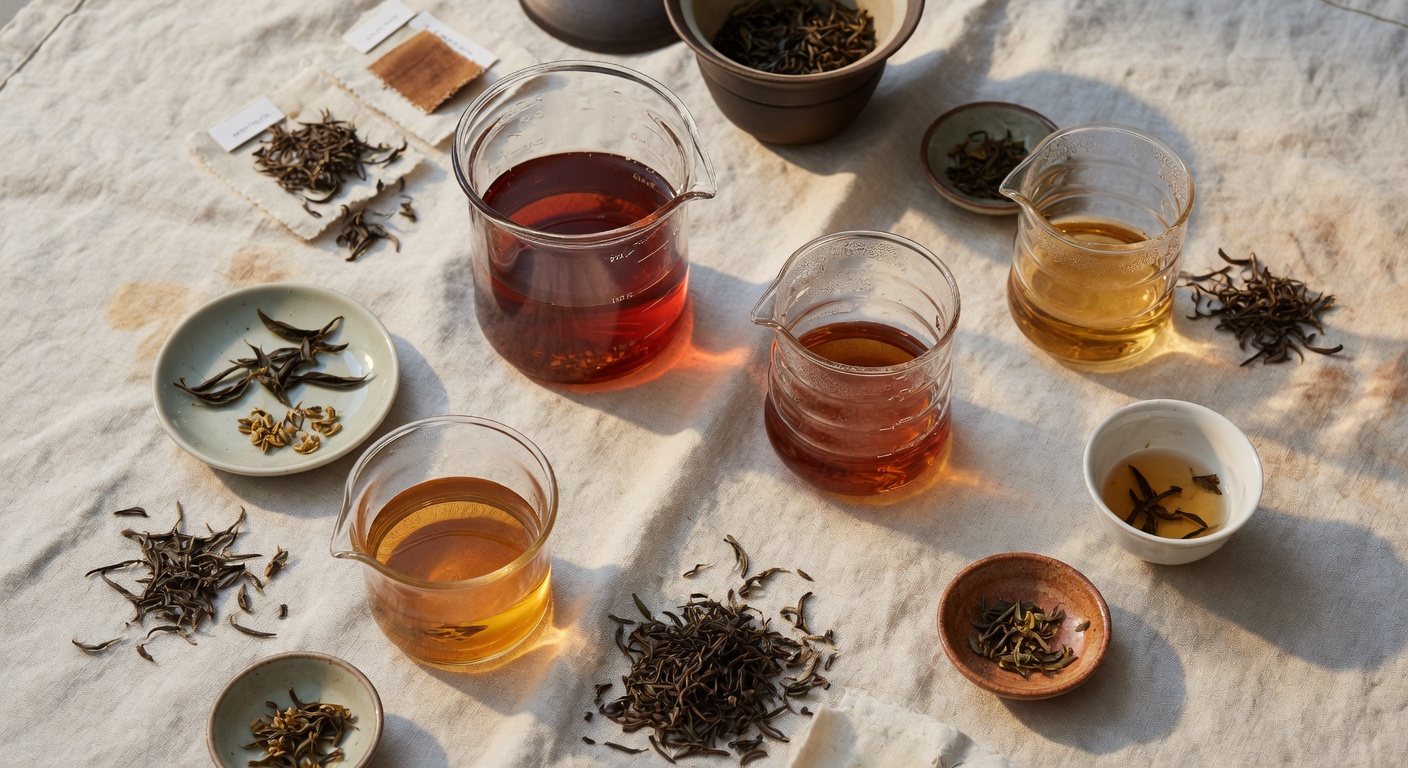
玻璃再次改變了這個物件。瓷或陶質的公道杯遮住了茶湯;硼矽玻璃則將其顯露。霎時間,gōng dào bēi 也成了判讀的工具 — 你可以看著茶色在幾沖之間加深,看見 yín zhēn 中懸浮的毫毛,在茶湯抵達茶杯前就捕捉到烘焙得宜的 Mí Lán Xiāng(蜜兰香)所呈現的橙紅。對於著重視覺的泡茶者來說,這與均分功能同樣重要。

好的玻璃公道杯有幾個共通點。壺嘴應俐落斷水,唇邊不滴漏 — 這幾乎全看壺嘴底部的角度,要打磨得銳利而非圓捲。把手,若有的話,絕不可傳熱;多數現代設計採用冷的硼矽玻璃側耳,或纏繞藤條的握柄。容量應與茶壺匹配 — 150毫升的壺,適合200-250毫升的公道杯,以容納泡沫圈並留些許空間。再大則茶湯在送達杯前會冷卻過快。

硼矽玻璃3.3是標準玻璃。它能承受沸水注入常溫器皿的熱衝擊,且經年累月日常使用也不起霧或開裂。鉛水晶雖美但會溶出;鈉鈣玻璃則易碎。關於沖泡的幾何學,請參考 thetea.app 上的 gōng dào bēi 條目,該文更詳細追溯了此器物的二十世紀演變脈絡。

本季公道杯

一件手工吹製於河北小工作室的作品,尺寸對應最常見的工夫茶模式 — 150毫升壺,供四人杯。

A buyer's note

Choosing a fairness pitcher

容量配合茶壺

Pick a pitcher 25-50% larger than your teapot. A 150ml pot pairs with 200-250ml; a 200ml pot wants 280-350ml. Too large and the liquor cools mid-pour.

乾試壺嘴

Fill with water and pour slowly, then cut off sharply. A good spout stops cleanly with no drip running back along the underside. This is the single most important test.

硼矽玻璃3.3,非鈉鈣

Only borosilicate handles boiling water poured into a cool vessel without risk. Check that the seller specifies the grade — reputable studios will state it directly.

有把手或無把手

Handle-less pitchers are gripped by the cool upper rim and look cleaner on the table. Handled versions are safer for beginners and for long sessions where the rim stays hot.

每次使用間的保養

Rinse with hot water only — no soap, which clings to glass and dulls the next infusion. Air-dry inverted on a bamboo rack. Polish occasionally with a soft linen cloth to remove tea film.

不同茶類無需專用公道杯

Unlike clay, glass holds no memory of previous teas. A single well-chosen *gōng dào bēi* serves *sheng pu-erh*, dancong, white, and black tea equally — one of glass's quiet advantages.

Common questions

Asked, answered.

Do I really need a fairness pitcher for gongfu brewing?

For sessions longer than two infusions, yes. Without one, the first cup poured will be weaker than the last by a noticeable margin, especially with fast-brewing oolong and pu-erh.

Can I use the same pitcher for green, oolong, and pu-erh?

Yes — glass is inert and holds no flavour memory. This is one reason visual brewers prefer it to porcelain or clay for the decanter, even when their pots are clay.

Why is the rim hot if there is no handle?

The upper 1.5cm of a handle-less *gōng dào bēi* stays cool because the liquor sits below it and glass conducts heat slowly. Grip by the top rim, not the belly.

How do I remove tea staining from inside the glass?

A paste of baking soda and warm water, left for ten minutes, lifts most film. Rinse thoroughly. Avoid scouring pads, which leave permanent micro-scratches.

Is a strainer built into the spout necessary?

Only if you brew without a strainer in the pot itself. Most gongfu brewers use a separate small strainer set on the pitcher mouth, which gives finer control than a built-in version.

What size pitcher pairs with a standard gaiwan?

A 110-120ml gaiwan pairs well with a 180-220ml pitcher. The full gaiwan volume plus leaf displacement and a little headroom comes to roughly 150ml of liquor per infusion.

Can I learn proper decanting technique online?

The gongfu fundamentals course on tea.school covers fairness pitcher handling in module three, including the wrist motion that prevents drips and the pause that settles foam.