tea.glass · sampling channel Encyclopedia · School · Atlas · Pu-erh · Equipment EN · RU · · · FR · ES · AR
tea.glass Cart (0)

home · catalog

Cristalería — jarras de equidad

El recipiente que iguala cada vertido

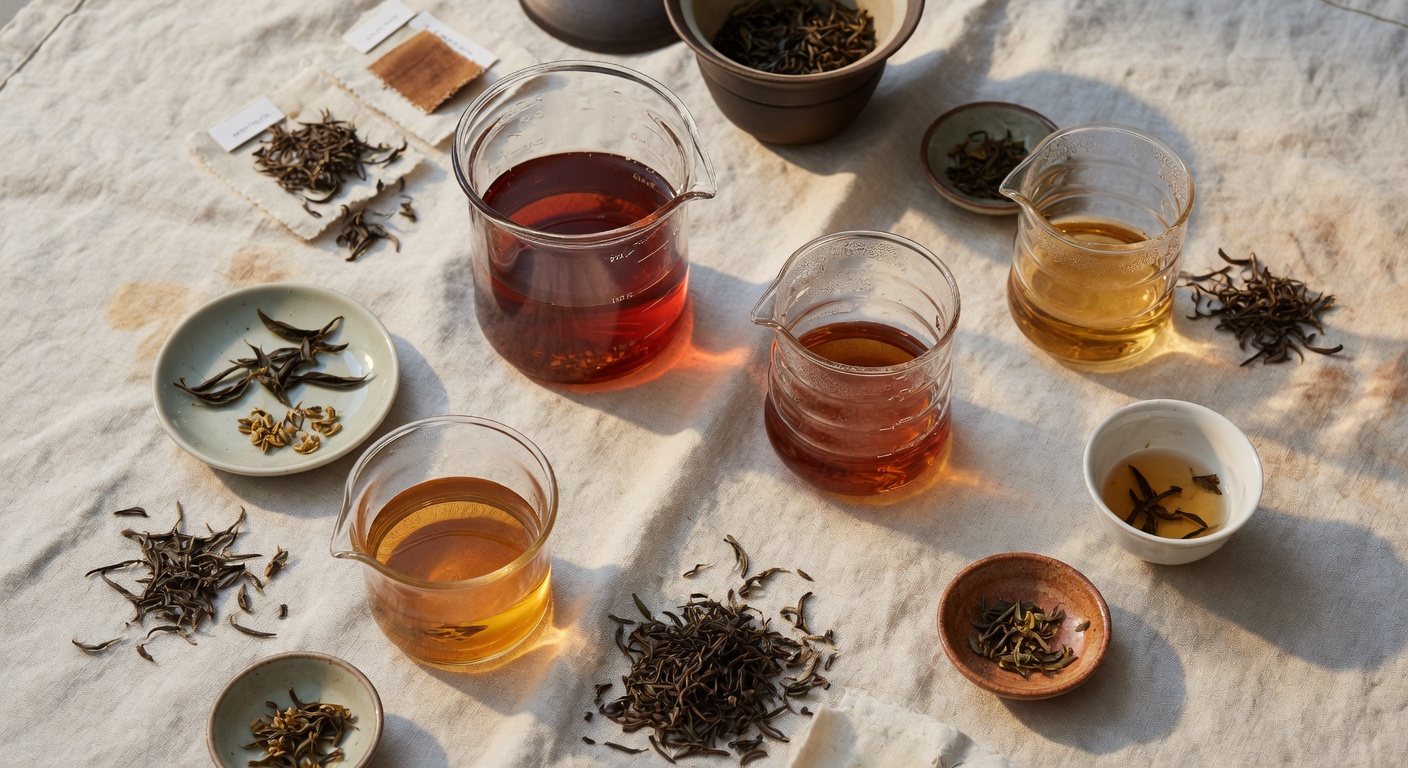
Una *gōng dào bēi* (公道杯) se sitúa entre la tetera y las tazas — recibe la infusión completa, mezcla las porciones fuertes y débiles, y luego distribuye un vertido uniforme a cada bebedor. En vidrio, se convierte también en una ventana al color del licor, la lectura más honesta que obtendrás del carácter de un té.

Cristalería — jarras de equidad

Por qué existe la jarra de equidad

La jarra de equidad — gōng dào bēi (公道杯), literalmente «taza del camino igual» — fue una adición tardía a la mesa de gongfu. Durante la mayor parte de las dinastías Ming y Qing, el té se vertía directamente de la tetera a las tazas en un arco giratorio, equilibrando la fuerza a ojo. El decantador específico llegó con el renacimiento del gongfu taiwanés de los años 70 y 80, cuando el servicio se formalizó en torno a pequeñas teteras de barro e infusiones cortas y múltiples. Con tiempos de infusión medidos en segundos, incluso una diferencia de medio segundo entre la primera y la última taza servida crea un desequilibrio notable. La jarra de equidad lo resuelve en un solo paso: toda la infusión se decanta de una vez, se agita por su propia turbulencia y luego se distribuye.

El vidrio transformó el objeto de nuevo. Una jarra de porcelana o barro oculta el licor; una de borosilicato lo revela. De repente, el gōng dào bēi es también un instrumento de lectura — observas cómo el color se intensifica a través de las infusiones, ves tricomas suspendidos en un yín zhēn, captas el rojo anaranjado de un Mí Lán Xiāng (蜜兰香) correctamente tostado antes de que llegue a la taza. Para los preparadores que valoran lo visual, esto importa tanto como la función igualadora.

Las buenas jarras de equidad de vidrio comparten algunas cualidades. El pico debe cortar el vertido limpiamente, sin goteo en el labio — esto es casi por completo una cuestión del ángulo inferior del pico, afilado en lugar de redondeado. El asa, si la hay, no debe transmitir calor; la mayoría de los diseños modernos utilizan una oreja lateral de borosilicato frío o un agarre de ratán envuelto. La capacidad debe coincidir con la de tu tetera — una tetera de 150ml necesita una jarra de 200-250ml, con espacio para el anillo de espuma y un poco de margen. Algo más grande y el licor se enfría demasiado rápido antes de llegar a las tazas.

El borosilicato 3.3 es el vidrio estándar. Tolera el choque térmico del agua hirviendo vertida en un recipiente a temperatura ambiente, y con años de uso diario no se enturbia ni se agrieta. El cristal al plomo se ve hermoso pero lixivia; el vidrio sodocálcico es frágil. Para la geometría de la preparación, consulta la entrada de gōng dào bēi en thetea.app, que rastrea el linaje del siglo XX de esta vasija con más detalle.

Jarras de equidad de esta temporada

Una pieza, soplada a mano en un pequeño taller de Hebei, dimensionada para el formato gongfu más común — una tetera de 150ml que sirve cuatro tazas.

A buyer's note

Choosing a fairness pitcher

Adapta la capacidad a tu tetera

Pick a pitcher 25-50% larger than your teapot. A 150ml pot pairs with 200-250ml; a 200ml pot wants 280-350ml. Too large and the liquor cools mid-pour.

Prueba el pico en seco

Fill with water and pour slowly, then cut off sharply. A good spout stops cleanly with no drip running back along the underside. This is the single most important test.

Borosilicato 3.3, no vidrio sodocálcico

Only borosilicate handles boiling water poured into a cool vessel without risk. Check that the seller specifies the grade — reputable studios will state it directly.

Con asa o sin asa

Handle-less pitchers are gripped by the cool upper rim and look cleaner on the table. Handled versions are safer for beginners and for long sessions where the rim stays hot.

Cuidado entre sesiones

Rinse with hot water only — no soap, which clings to glass and dulls the next infusion. Air-dry inverted on a bamboo rack. Polish occasionally with a soft linen cloth to remove tea film.

Es innecesaria una jarra por familia de tés

Unlike clay, glass holds no memory of previous teas. A single well-chosen *gōng dào bēi* serves *sheng pu-erh*, dancong, white, and black tea equally — one of glass's quiet advantages.

Common questions

Asked, answered.

Do I really need a fairness pitcher for gongfu brewing?

For sessions longer than two infusions, yes. Without one, the first cup poured will be weaker than the last by a noticeable margin, especially with fast-brewing oolong and pu-erh.

Can I use the same pitcher for green, oolong, and pu-erh?

Yes — glass is inert and holds no flavour memory. This is one reason visual brewers prefer it to porcelain or clay for the decanter, even when their pots are clay.

Why is the rim hot if there is no handle?

The upper 1.5cm of a handle-less *gōng dào bēi* stays cool because the liquor sits below it and glass conducts heat slowly. Grip by the top rim, not the belly.

How do I remove tea staining from inside the glass?

A paste of baking soda and warm water, left for ten minutes, lifts most film. Rinse thoroughly. Avoid scouring pads, which leave permanent micro-scratches.

Is a strainer built into the spout necessary?

Only if you brew without a strainer in the pot itself. Most gongfu brewers use a separate small strainer set on the pitcher mouth, which gives finer control than a built-in version.

What size pitcher pairs with a standard gaiwan?

A 110-120ml gaiwan pairs well with a 180-220ml pitcher. The full gaiwan volume plus leaf displacement and a little headroom comes to roughly 150ml of liquor per infusion.

Can I learn proper decanting technique online?

The gongfu fundamentals course on tea.school covers fairness pitcher handling in module three, including the wrist motion that prevents drips and the pause that settles foam.