tea.glass · sampling channel Encyclopedia · School · Atlas · Pu-erh · Equipment EN · RU · · · FR · ES · AR
tea.glass Cart (0)

home · catalog

玻璃器皿 — 公道杯

那件让每斟都均匀的器皿

一把*gōng dào bēi*(公道杯)安放在茶壶与杯盏之间 — 承接全量茶汤,混合浓淡,再均匀斟给每位品饮者。当以玻璃制作时,它更是一扇观察茶汤色泽的窗户,是你能得到的对茶叶本色最诚实的判读。

玻璃器皿 — 公道杯

为何需要公道杯

公道杯 — gōng dào bēi(公道杯),字面义为「公平之杯」——是工夫茶席上较晚加入的器物。明清大多数时期,茶汤直接由壶注入杯盏,循弧形旋转斟倒,冲泡者凭眼力平衡浓淡。专用的分汤器伴随1970、80年代台湾工夫茶复兴而来,当时茶事围绕小陶壶与短暂多次冲泡成形。冲泡时间以秒计,第一杯与最后一杯即使只差半秒,也会造成明显不均。公道杯一举解决此问题:整壶茶汤一次倾出,借由其自身激荡混合,随即均分。

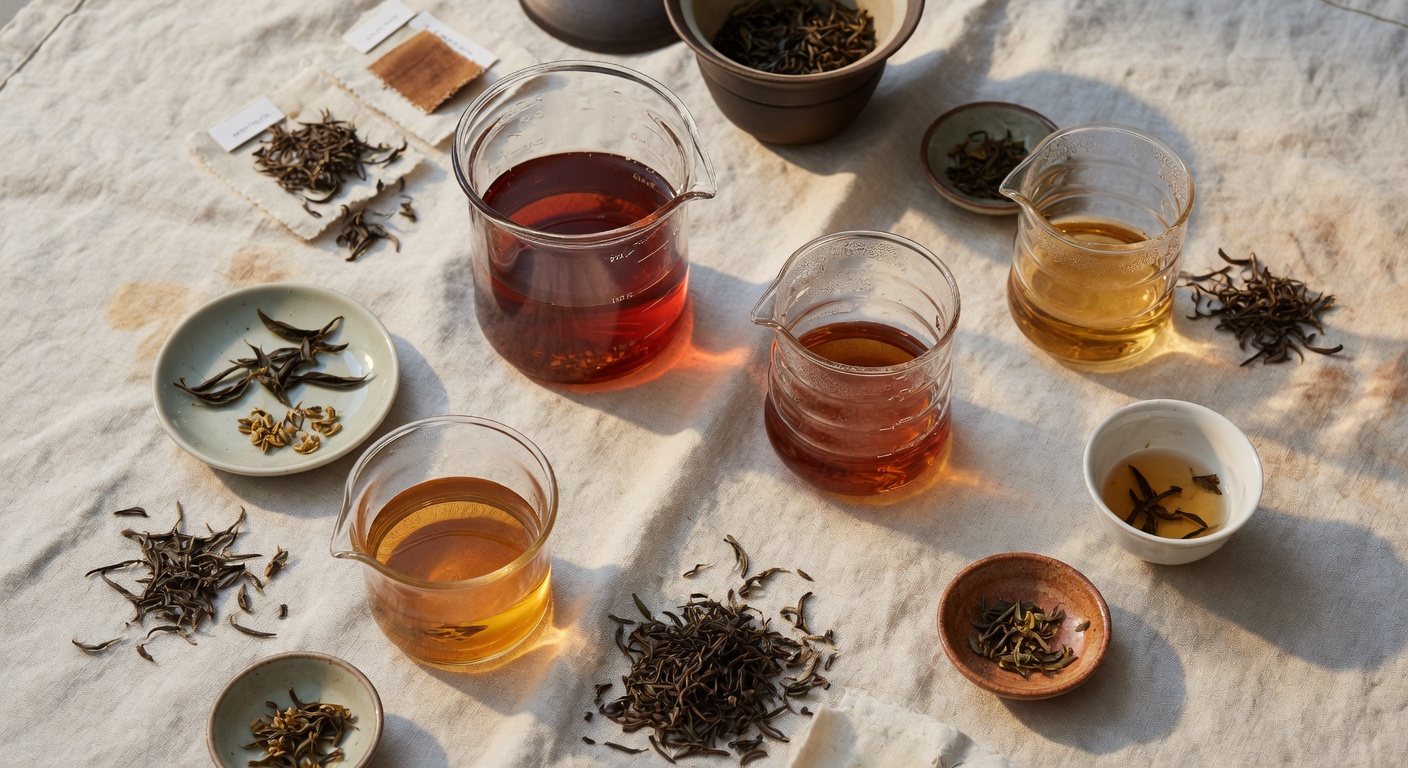
玻璃再次改变了这件器物。瓷制或陶制的公道杯掩藏茶汤;硼硅酸盐玻璃则展露无遗。霎时间,gōng dào bēi 还成了判读工具 — 你可以观察汤色在逐次冲泡间转深、看见银针那悬浮的毫毛、在茶汤入杯之前,就捕捉到焙火得宜的蜜兰香Mí Lán Xiāng)那一抹橙红。对视觉取向的冲泡者而言,这与均分功能同等重要。

优良的玻璃公道杯具备几项特质。壶嘴应能俐落断水,口缘无滴漏 — 这几乎全取决于壶嘴下缘的角度,需研磨尖锐而非圆弧收边。若有把手,则绝不可传热;多数现代设计采用凉爽的硼硅酸盐侧耳,或缠绕藤条的握柄。容量应与茶壶匹配 — 一把150毫升的壶,搭配200至250毫升的公道杯为宜,以容纳泡沫环并留有余裕。超过此容量,茶汤在斟入杯盏前便冷却过快。

硼硅酸盐3.3是标准玻璃材质。它能承受沸水注入室温器皿的热冲击,经年累月日常使用,亦不起雾或开裂。铅水晶虽美却会析出;钠钙玻璃则脆弱。关于冲泡的几何,详见 thetea.app 上的 gōng dào bēi 条目,该文更详尽追溯此器物的二十世纪系谱。

本季公道杯

一只手工吹制,出自河北小工坊,尺寸对应最普遍的工夫茶形式 — 150毫升壶,供四杯之用。

A buyer's note

Choosing a fairness pitcher

让容量与壶相匹配

Pick a pitcher 25-50% larger than your teapot. A 150ml pot pairs with 200-250ml; a 200ml pot wants 280-350ml. Too large and the liquor cools mid-pour.

干试壶嘴

Fill with water and pour slowly, then cut off sharply. A good spout stops cleanly with no drip running back along the underside. This is the single most important test.

硼硅酸盐3.3,而非钠钙玻璃

Only borosilicate handles boiling water poured into a cool vessel without risk. Check that the seller specifies the grade — reputable studios will state it directly.

有柄或无柄

Handle-less pitchers are gripped by the cool upper rim and look cleaner on the table. Handled versions are safer for beginners and for long sessions where the rim stays hot.

茶席间的保养

Rinse with hot water only — no soap, which clings to glass and dulls the next infusion. Air-dry inverted on a bamboo rack. Polish occasionally with a soft linen cloth to remove tea film.

不必为每种茶都准备一只公道杯

Unlike clay, glass holds no memory of previous teas. A single well-chosen *gōng dào bēi* serves *sheng pu-erh*, dancong, white, and black tea equally — one of glass's quiet advantages.

Common questions

Asked, answered.

Do I really need a fairness pitcher for gongfu brewing?

For sessions longer than two infusions, yes. Without one, the first cup poured will be weaker than the last by a noticeable margin, especially with fast-brewing oolong and pu-erh.

Can I use the same pitcher for green, oolong, and pu-erh?

Yes — glass is inert and holds no flavour memory. This is one reason visual brewers prefer it to porcelain or clay for the decanter, even when their pots are clay.

Why is the rim hot if there is no handle?

The upper 1.5cm of a handle-less *gōng dào bēi* stays cool because the liquor sits below it and glass conducts heat slowly. Grip by the top rim, not the belly.

How do I remove tea staining from inside the glass?

A paste of baking soda and warm water, left for ten minutes, lifts most film. Rinse thoroughly. Avoid scouring pads, which leave permanent micro-scratches.

Is a strainer built into the spout necessary?

Only if you brew without a strainer in the pot itself. Most gongfu brewers use a separate small strainer set on the pitcher mouth, which gives finer control than a built-in version.

What size pitcher pairs with a standard gaiwan?

A 110-120ml gaiwan pairs well with a 180-220ml pitcher. The full gaiwan volume plus leaf displacement and a little headroom comes to roughly 150ml of liquor per infusion.

Can I learn proper decanting technique online?

The gongfu fundamentals course on tea.school covers fairness pitcher handling in module three, including the wrist motion that prevents drips and the pause that settles foam.