Twelve pieces a month, in a Liuzhou courtyard
Gao Lihua works alone in a converted ground-floor workshop two streets back from the Liu River, in Liuzhou, Guangxi. She is sixty-one. She trained at the Beihai glass cooperative in the 1980s, left in 1996, and has been blowing one-off pieces under her own name for the last fourteen years. Her output is intentionally tiny — twelve named gaiwans a month, each logged in a paper ledger with a date, a buyer, and a one-line note about how the piece behaved on the pipe.
Michael Zhan visits her workshop every quarter on his Guangxi route. He sources mostly Yunnan and Fujian leaf, but the glassware is a personal detour — he found Gao through a Liuzhou pu-erh seller in 2022 and has been buying her gaiwans for tea.glass since the second batch.
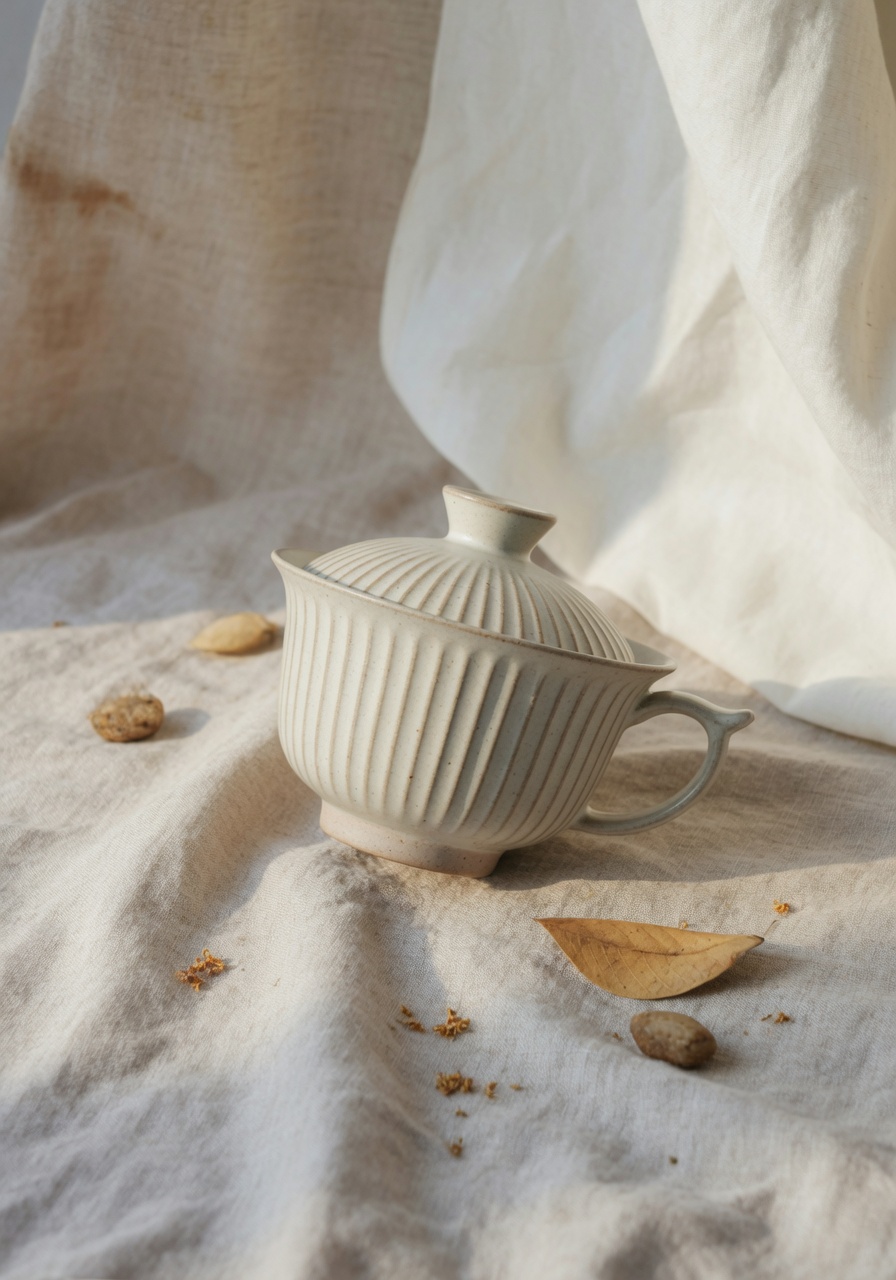
The fluted form is her own. She blows the parison into a twelve-ribbed graphite mold, then opens the rim by hand on the marver. The flutes are functional — they give the lid a positive register so it seats with a small audible click instead of sliding, which matters when your thumb is wet and the bowl is full.
Walls run 1.6 to 2.1mm. Capacity is checked by water-fill against a marked beaker, then etched on the foot in Gao’s handwriting. The lot Michael selected in March 2026 is twenty-four pieces across two firings — the second firing ran slightly warmer and the rims pulled a touch finer.